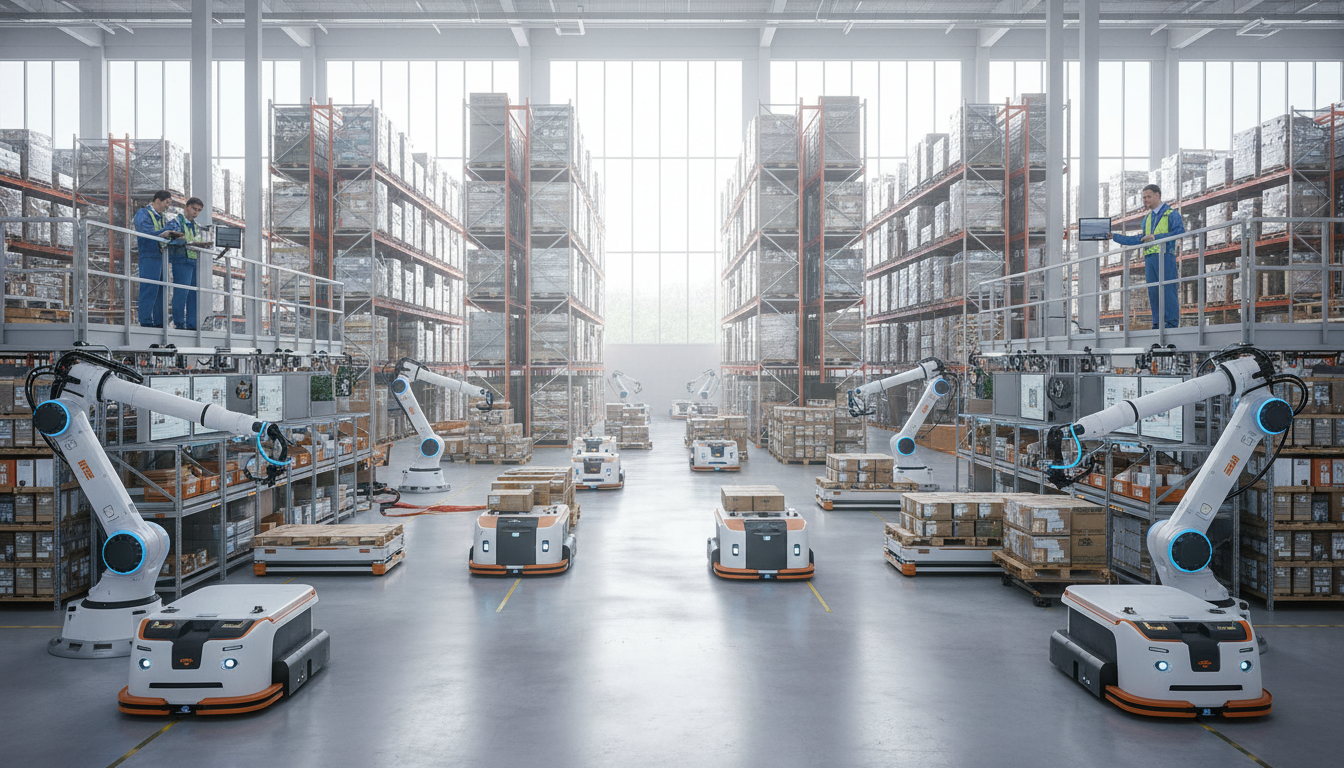
AI Driven Lightout Warehouses
AI Driven Lightout Warehouses represent a transformative shift in the Logistics sector, where advanced artificial intelligence seamlessly integrates with automated systems to create highly efficient, fully operational environments. This concept embodies a vision of warehouses that operate with minimal human intervention, utilizing AI for inventory management , order fulfillment, and real-time analytics. As companies prioritize operational agility and cost efficiency, the relevance of these warehouses becomes increasingly critical, reflecting a broader trend towards automation and smart logistics solutions.
The Logistics ecosystem is undergoing significant changes as AI-driven practices redefine operational frameworks and competitive landscapes. With enhanced efficiency in processes and more informed decision-making, stakeholders can respond swiftly to market demands and innovation cycles. The adoption of such technologies not only fosters improved interactions among supply chain participants but also opens pathways for growth amidst challenges like integration complexity and evolving consumer expectations. Ultimately, while the potential of AI Driven Lightout Warehouses is vast, organizations must navigate both opportunities and barriers to fully realize their strategic benefits.

Accelerate AI Adoption for Lightout Warehouses
Logistics companies should strategically invest in AI technologies and forge partnerships with leading tech firms to optimize operations and enhance supply chain efficiency. By implementing AI-driven solutions, businesses can expect significant improvements in order accuracy, reduced operational costs, and a stronger competitive edge in the market.
How AI is Revolutionizing Lightout Warehousing in Logistics
The Disruption Spectrum
Five Domains of AI Disruption in Logistics

Automate Warehouse Operations

Enhance Predictive Analytics

Optimize Supply Chain Networks

Improve Safety Protocols

Promote Sustainable Practices
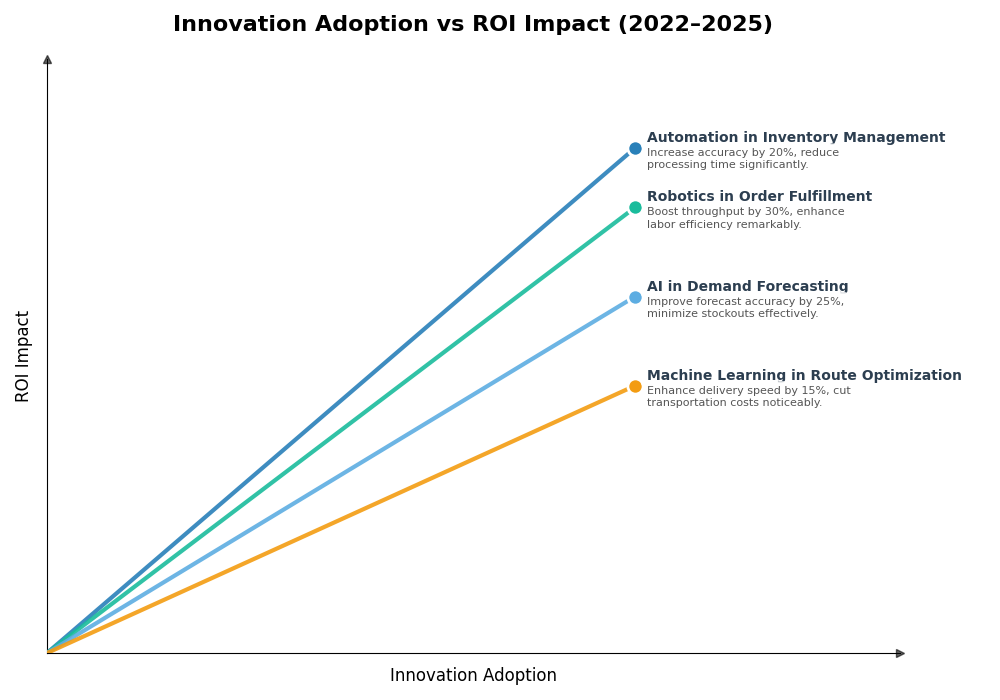
Compliance Case Studies
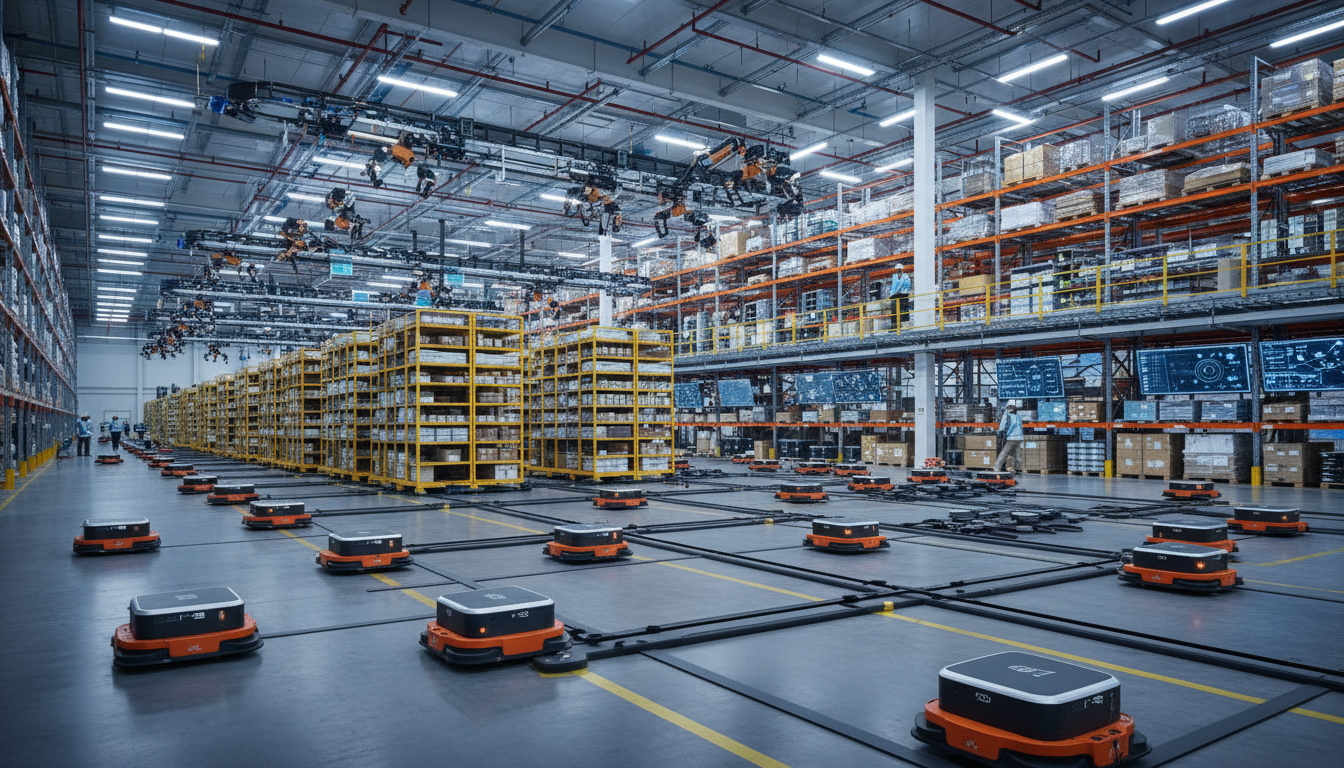

_case_study.png)
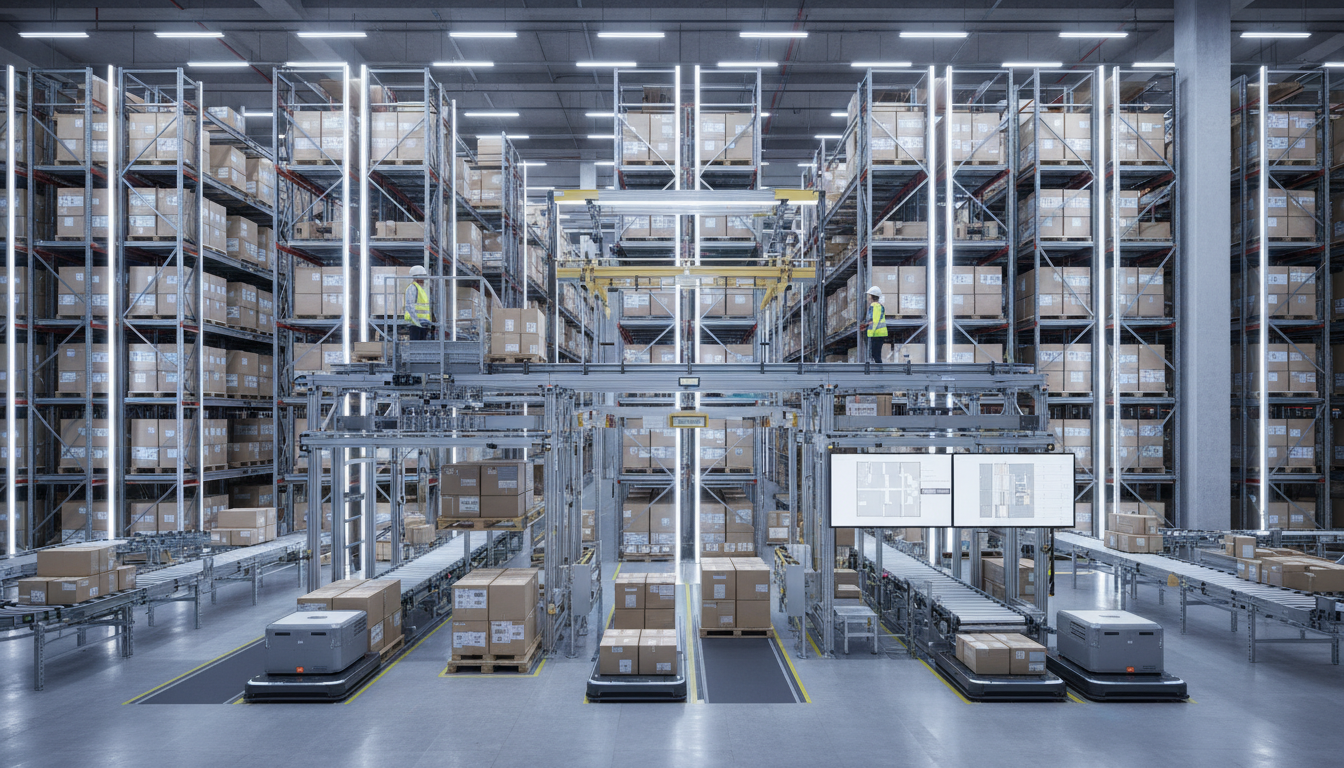
| Opportunities | Threats |
|---|---|
| Enhance market differentiation through AI-driven operational efficiencies. | Risk of workforce displacement due to increased automation reliance. |
| Boost supply chain resilience with real-time AI data analytics. | High technology dependency may lead to operational vulnerabilities. |
| Achieve automation breakthroughs, reducing costs and increasing throughput. | Compliance bottlenecks could hinder rapid AI adoption in logistics. |
Transform your logistics operations into AI-driven lightout warehouses and gain the competitive edge. Don’t get left behind—embrace innovation and elevate your efficiency today!
Risk Senarios & Mitigation
Neglecting Compliance Regulations
Legal consequences arise; conduct regular compliance audits.
Compromising Data Security Practices
Data breaches threaten trust; implement robust encryption protocols.
Overlooking AI Bias Issues
Inequitable decisions occur; establish diverse training datasets.
Experiencing Operational Failures
Delays impact efficiency; create contingency operational plans.
Assess how well your AI initiatives align with your business goals
Glossary
Work with Atomic Loops to architect your AI implementation roadmap — from PoC to enterprise scale.
Contact NowFrequently Asked Questions
- AI Driven Lightout Warehouses automate logistics operations using advanced AI technologies and analytics.
- They significantly reduce human intervention, leading to increased operational efficiency and accuracy.
- The solution enhances inventory management by providing real-time visibility and tracking.
- Companies benefit from reduced operational costs and improved order fulfillment rates.
- Ultimately, it drives competitive advantage through faster, data-driven decision-making.
- Begin with a comprehensive assessment of your existing warehouse processes and systems.
- Identify specific areas where AI can provide the most value and improve efficiency.
- Engage with technology partners who specialize in AI and warehouse automation solutions.
- Pilot projects can help validate AI technologies before full-scale implementation.
- Ensure your team is trained and ready to adapt to new AI-driven workflows.
- Organizations report enhanced productivity through streamlined processes and reduced downtime.
- The technology improves accuracy in inventory management, minimizing stock discrepancies.
- Companies often see faster order processing times, leading to higher customer satisfaction.
- AI enables better forecasting and demand planning, optimizing stock levels effectively.
- Overall, businesses experience improved return on investment through operational efficiencies.
- Resistance to change from employees can hinder successful implementation of AI technologies.
- Integration with legacy systems may pose technical challenges and require additional resources.
- Data quality and availability are critical; poor data can lead to suboptimal AI performance.
- Compliance with industry regulations must be considered during AI deployment projects.
- Planning for ongoing training and support is essential to maximize AI capabilities.
- Retail logistics can utilize AI for enhanced inventory management and customer order fulfillment.
- Pharmaceutical companies benefit from improved compliance and tracking of sensitive products.
- E-commerce platforms leverage AI for rapid order processing and dynamic inventory management.
- Manufacturing logistics apply AI in optimizing supply chain workflows and reducing lead times.
- Each sector must tailor AI applications to meet unique operational challenges and goals.
- Organizations should consider adoption when they face significant operational inefficiencies.
- A readiness assessment can help determine if your infrastructure is prepared for AI integration.
- Market competition and customer demands often signal the need for technological advancements.
- Companies should adopt AI when they have sufficient data to train AI models effectively.
- Timing is crucial; early adoption can provide a competitive edge in the logistics industry.
- Investing in AI enhances operational efficiency, leading to significant cost savings over time.
- It positions companies to meet increasing customer expectations for speed and accuracy.
- AI technologies provide actionable insights, improving strategic decision-making capabilities.
- Automation reduces labor costs and mitigates the risk of human error in operations.
- Ultimately, AI adoption fosters innovation and prepares businesses for future market challenges.