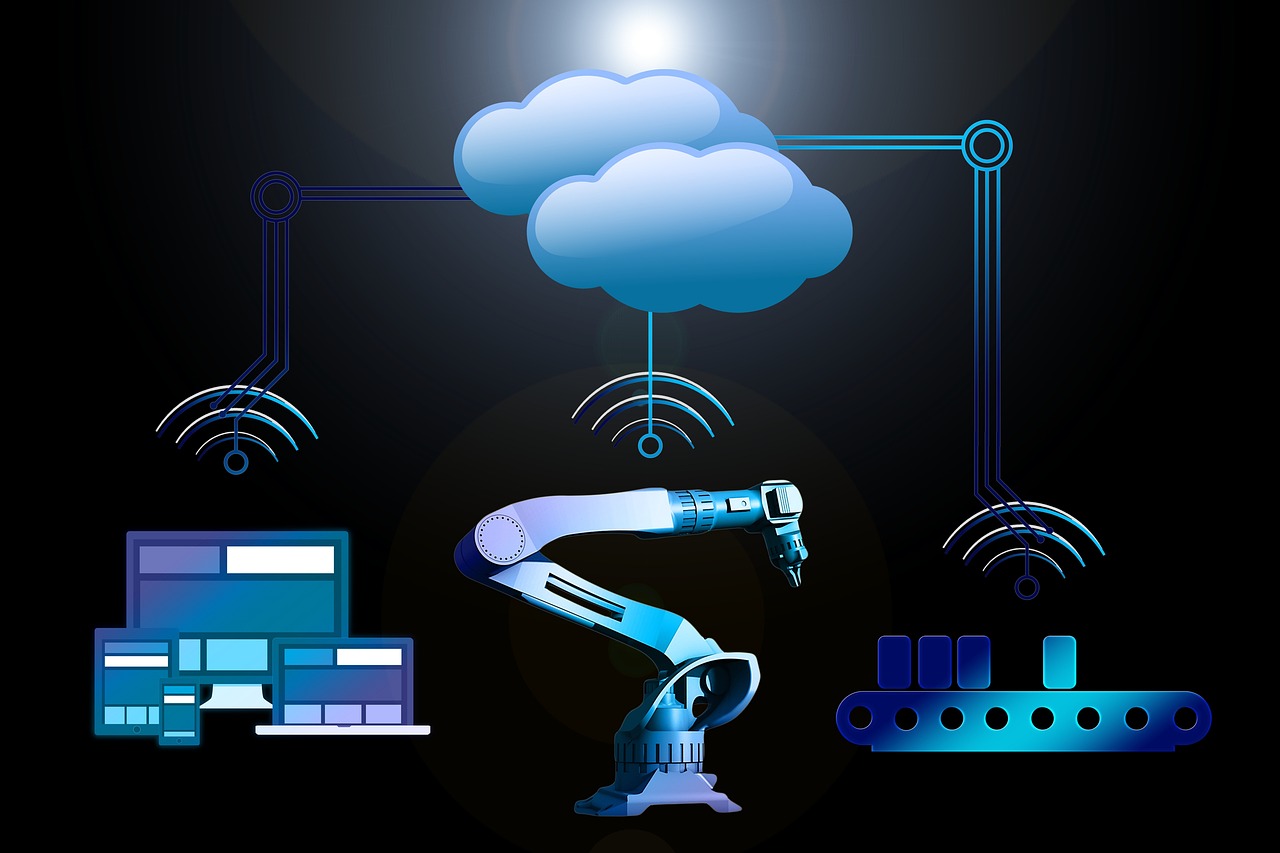
Plan Collision-Free Industrial Robot Paths with MoveIt 2 and NVIDIA cuMotion
Plan Collision-Free Industrial Robot Paths with MoveIt 2 and NVIDIA cuMotion integrates advanced motion planning technologies to optimize robot trajectories in real-time. This solution significantly enhances operational efficiency and safety in automated environments, reducing downtime and improving productivity.
Glossary Tree
Explore the comprehensive technical hierarchy and ecosystem of planning collision-free industrial robot paths using MoveIt 2 and NVIDIA cuMotion.
Protocol Layer
ROS 2 Communication Protocols
Utilizes DDS (Data Distribution Service) for real-time data exchange between robotic components in MoveIt 2.
NVIDIA cuMotion API
Provides an interface for motion planning and execution using NVIDIA’s GPU-accelerated computing capabilities.
RTSP for Streaming Data
Real-Time Streaming Protocol enables low-latency transmission of sensor data to robots for collision avoidance.
gRPC for Remote Procedure Calls
Facilitates efficient communication between distributed systems using protocol buffers for serialization.
Data Engineering
Path Planning Data Model
A structured data model used to represent robot paths for collision-free navigation in industrial environments.
Dynamic Path Optimization
Real-time data processing techniques that adjust robot paths based on sensor feedback and environmental changes.
Data Security in Robotics
Implementing access controls and encryption to protect sensitive robot path data from unauthorized access.
Consistency in Path Data
Methods ensuring reliable and accurate data transactions for robot path adjustments during operation.
AI Reasoning
Path Planning Optimization
Utilizes advanced algorithms to ensure efficient, collision-free movement paths for industrial robots.
Contextual Prompting Techniques
Employs contextual data to refine robot path predictions and improve decision-making accuracy.
Collision Avoidance Mechanisms
Integrates sensory feedback to prevent potential collisions in real-time during robot navigation.
Dynamic Reasoning Chains
Establishes logical sequences to evaluate and adjust robot paths based on environmental changes.
Maturity Radar v2.0
Multi-dimensional analysis of deployment readiness.
Technical Pulse
Real-time ecosystem updates and optimizations.
MoveIt 2 SDK Enhancement
Enhanced MoveIt 2 SDK enables efficient path planning with NVIDIA cuMotion, integrating advanced motion algorithms and supporting real-time collision detection for industrial robots.
cuMotion Data Flow Optimization
New architectural patterns streamline data flow between MoveIt 2 and NVIDIA cuMotion, enhancing responsiveness and reducing latency for real-time industrial applications.
Enhanced Path Planning Security
Implementation of robust authentication mechanisms in MoveIt 2 ensures secure access to path planning features, safeguarding industrial operations against unauthorized manipulations.
Pre-Requisites for Developers
Before deploying MoveIt 2 with NVIDIA cuMotion, ensure your robot configuration, path planning algorithms, and collision detection mechanisms are optimized for precision and reliability in production environments.
Technical Foundation
Core components for robotic path planning
Robot Path Schemas
Define schemas for robot paths to ensure efficient data handling and retrieval during collision-free planning.
Path Planning Algorithms
Implement advanced algorithms like RRT* or PRM to optimize path planning and minimize computation time in dynamic environments.
NVIDIA cuMotion Setup
Correctly configure NVIDIA cuMotion for hardware acceleration, enhancing computational performance for real-time path calculations.
Real-Time Metrics
Integrate observability tools to monitor robot path performance and detect anomalies during operation for proactive adjustments.
Critical Challenges
Common pitfalls in robotic path planning
error_outline Path Collision Risks
Failure to accurately calculate paths can lead to collisions, endangering both robots and human operators in shared environments.
warning Algorithmic Inefficiencies
Suboptimal algorithms may lead to excessive computation time, delaying real-time robot responses and affecting productivity.
How to Implement
code Code Implementation
robot_path_planning.py
from typing import List, Dict
import os
import rclpy
from rclpy.node import Node
from moveit_commander import RobotCommander, PlanningSceneInterface, MoveGroupCommander
from geometry_msgs.msg import Pose

# Configuration
robot_namespace = os.getenv('ROBOT_NAMESPACE', '/robot')

# Initialize the MoveIt Commander
rclpy.init()
robot = RobotCommander(robot_namespace)
scene = PlanningSceneInterface()
group = MoveGroupCommander('manipulator')

# Function to plan collision-free path
def plan_path(target_pose: Pose) -> Dict[str, str]:
    try:
        group.set_pose_target(target_pose)
        plan = group.plan()
        if plan:
            return {'success': True, 'plan': plan}
        else:
            return {'success': False, 'message': 'Planning failed.'}
    except Exception as e:
        return {'success': False, 'error': str(e)}

# Main execution
if __name__ == '__main__':
    target_pose = Pose()
    target_pose.position.x = 0.5
    target_pose.position.y = 0.0
    target_pose.position.z = 0.5
    target_pose.orientation.w = 1.0

    result = plan_path(target_pose)
    print(result)
    rclpy.shutdown()
Implementation Notes for Scale
This implementation utilizes Python's MoveIt Commander for robot path planning and NVIDIA cuMotion for performance optimization. Key features include real-time planning and collision avoidance. Leveraging Python's robust ecosystem enables easy integration and scalability in robotics applications, ensuring reliability and efficiency in industrial settings.
cloud Cloud Infrastructure

- Amazon SageMaker: Facilitates training of ML models for robotic path planning.
- AWS Lambda: Enables serverless execution of collision detection algorithms.
- Amazon ECS: Manages containerized applications for real-time robot control.

- Google Kubernetes Engine: Orchestrates containerized applications for robotics simulations.
- Cloud Run: Deploys and scales APIs for real-time path adjustments.
- Vertex AI: Provides tools for developing and deploying ML models.

- Azure Functions: Offers serverless compute for on-demand path planning.
- Azure Kubernetes Service: Manages containerized workloads for robotic applications.
- CosmosDB: Stores and retrieves spatial data for robots efficiently.
Expert Consultation
Our team specializes in optimizing path planning systems for industrial robots using MoveIt 2 and NVIDIA cuMotion.
Technical FAQ
01. How does MoveIt 2 integrate with NVIDIA cuMotion for path planning?
MoveIt 2 utilizes NVIDIA cuMotion's GPU-accelerated motion planning capabilities, allowing seamless integration for real-time path optimization. To implement, configure the MoveIt 2 planner to leverage cuMotion through custom plugins, ensuring the robot's kinematics are compatible. This combination enhances performance, enabling complex path computations even in dynamic environments.
02. What security measures are necessary for deploying MoveIt 2 with cuMotion?
When deploying MoveIt 2 with cuMotion, implement secure communication protocols like TLS for data transmission. Additionally, ensure proper access control mechanisms are in place using role-based access to restrict operations. Regularly audit logs to monitor any unauthorized access attempts and ensure compliance with relevant industrial safety standards.
03. What happens if the robot encounters an obstacle during path execution?
If an obstacle is detected during execution, MoveIt 2's reactive planning features can be triggered. This involves recalculating the path in real-time, utilizing sensor feedback to adjust the robot's trajectory. Implementing fallback strategies, such as predefined safe states, can further enhance reliability in critical scenarios.
04. What hardware prerequisites are required for MoveIt 2 and cuMotion integration?
To effectively run MoveIt 2 with NVIDIA cuMotion, ensure your system has a compatible NVIDIA GPU (e.g., RTX series) with CUDA support. Additionally, install ROS 2 and the required MoveIt 2 packages, along with the NVIDIA cuMotion SDK. Adequate RAM (16GB+) and fast storage (SSD) are also recommended for optimal performance.
05. How does MoveIt 2 with cuMotion compare to traditional path planning methods?
MoveIt 2 with cuMotion significantly outperforms traditional CPU-based path planning methods by leveraging GPU acceleration, which reduces computation times from seconds to milliseconds. This enables real-time adjustments and complex planning in dynamic environments, while traditional methods often struggle with performance under similar conditions. The trade-off includes increased initial setup complexity.
Ready to optimize your robot paths with MoveIt 2 and NVIDIA cuMotion?
Our experts empower you to architect, deploy, and optimize collision-free paths using MoveIt 2 and NVIDIA cuMotion, transforming your robotics efficiency and safety.