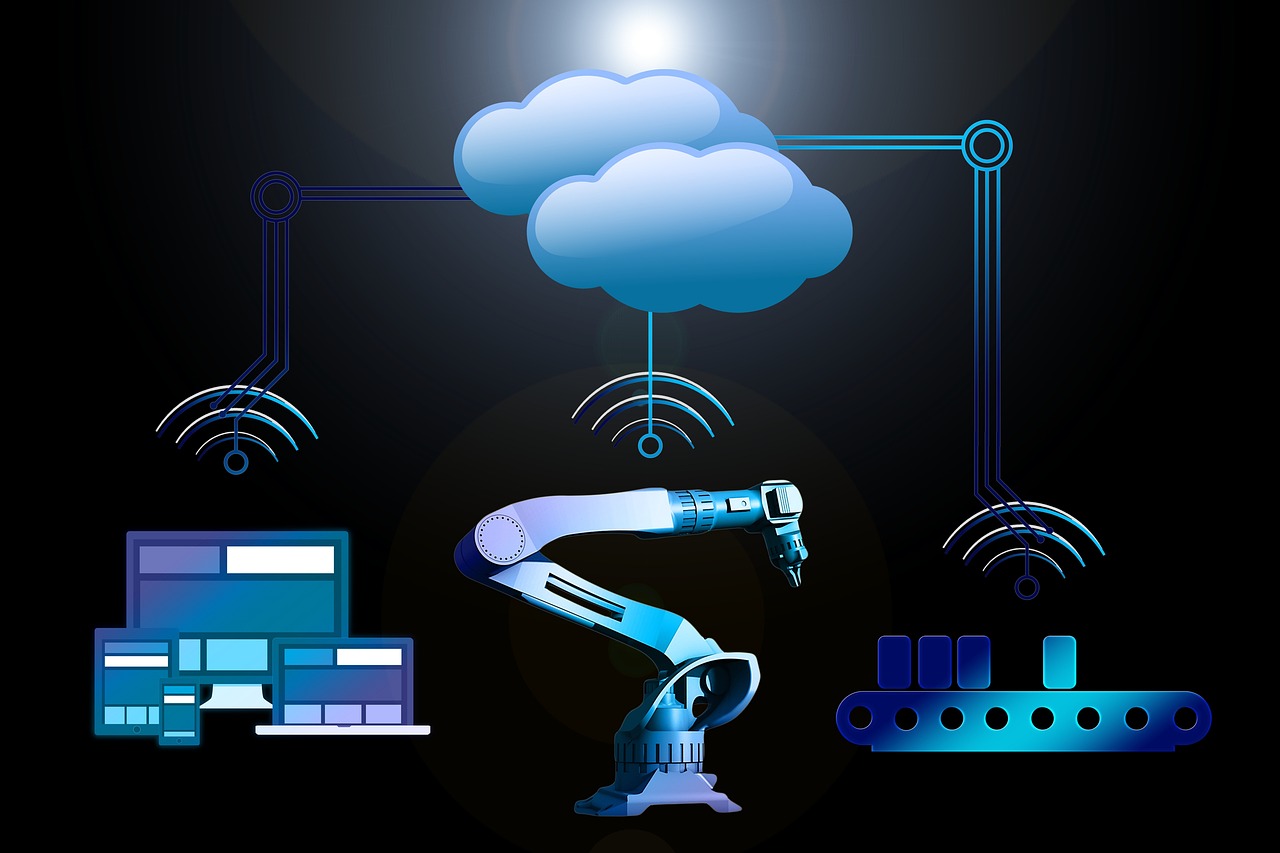
Align Industrial LLMs with RLHF and Hugging Face TRL for Manufacturing Use Cases
Aligning Industrial LLMs with RLHF and Hugging Face TRL creates a robust framework for integrating advanced AI models into manufacturing processes. This synergy improves decision-making and automation, enabling real-time insights and enhanced operational efficiency across the industry.
Glossary Tree
Explore the technical hierarchy and ecosystem integration of Industrial LLMs, RLHF, and Hugging Face TRL for manufacturing applications.
Protocol Layer
Hugging Face TRL Framework
A framework for integrating Reinforcement Learning from Human Feedback with Transformer models in industrial applications.
RLHF Optimization Protocol
Protocol for optimizing language models based on human feedback for enhanced contextual understanding in manufacturing tasks.
gRPC Communication Standard
A high-performance, open-source RPC framework for efficient communication between distributed systems in manufacturing.
RESTful API Specification
Standard for building APIs that enable seamless integration of LLMs with manufacturing software solutions.
Data Engineering
Industrial Data Lake Architecture
A scalable architecture for storing large volumes of unstructured data from manufacturing processes, enabling efficient LLM training.
Data Chunking Techniques
Optimizing data processing by breaking down large datasets into manageable chunks for efficient LLM training.
Role-Based Access Control (RBAC)
A security mechanism ensuring only authorized personnel can access sensitive manufacturing data and LLM outputs.
Transactional Data Integrity
Ensuring consistent and reliable data transactions during LLM updates and manufacturing data processing.
AI Reasoning
Reinforcement Learning from Human Feedback (RLHF)
A method for aligning large language models with human preferences through iterative feedback loops and fine-tuning.
Contextual Prompt Optimization
Techniques to refine prompts based on contextual understanding for improved model responses in manufacturing scenarios.
Hallucination Mitigation Strategies
Procedures to identify and reduce incorrect or fabricated outputs from models, ensuring reliability in manufacturing applications.
Chain-of-Thought Reasoning
Utilizing logical sequences to enhance model inference, improving decision-making in industrial use cases.
Maturity Radar v2.0
Multi-dimensional analysis of deployment readiness.
Technical Pulse
Real-time ecosystem updates and optimizations.
Hugging Face TRL SDK Integration
Enhanced implementation of Hugging Face's TRL SDK for aligning industrial LLMs with RLHF, enabling efficient training and evaluation for manufacturing tasks.
RLHF Workflow Architecture
Introduced a modular architecture for RLHF workflows, enabling seamless integration with industrial LLMs, optimizing data flow, and enhancing model training efficiency.
Data Encryption Standards Implementation
Implemented AES-256 data encryption for secure model training with RLHF, safeguarding sensitive manufacturing data in compliance with industry regulations.
Pre-Requisites for Developers
Before deploying Align Industrial LLMs with RLHF and Hugging Face TRL, confirm that your data architecture and security protocols align with operational standards to ensure scalability and reliability in manufacturing applications.
Technical Foundation
Core components for model alignment
Normalized Schemas
Implement normalized schemas to ensure data integrity and facilitate efficient querying. This avoids redundancy and maintains data consistency across models.
Connection Pooling
Configure connection pooling to manage database connections effectively, reducing latency and preventing resource exhaustion during high load periods.
Environment Variables
Set up environment variables for sensitive configurations like API keys and database URLs, enhancing security and facilitating easy deployment changes.
Observability Metrics
Integrate observability tools for logging and metrics collection. This allows real-time monitoring of model performance and system health.
Critical Challenges
Common pitfalls in deployment and integration
error_outline Semantic Drifting in Vectors
Semantic drifting occurs when model outputs diverge from the intended meaning over time, often due to inadequate retraining or data drift.
sync_problem Integration Failures
Integration failures can arise from mismatched APIs or data formats, leading to ineffective model deployment and operational downtime.
How to Implement
code Code Implementation
industrial_llm_rlhf.py
from typing import Dict, Any
import os
import logging
from transformers import AutoModelForCausalLM, AutoTokenizer
from trl import RewardTrainer

# Configuration
class Config:
    API_KEY: str = os.getenv('API_KEY')
    MODEL_NAME: str = 'gpt-2'
    LOG_LEVEL: str = os.getenv('LOG_LEVEL', 'INFO')

# Initialize logging
logging.basicConfig(level=Config.LOG_LEVEL)
logger = logging.getLogger(__name__)

# Load model and tokenizer
try:
    tokenizer = AutoTokenizer.from_pretrained(Config.MODEL_NAME)
    model = AutoModelForCausalLM.from_pretrained(Config.MODEL_NAME)
    logger.info('Model and tokenizer loaded successfully.')
except Exception as e:
    logger.error(f'Failed to load model: {str(e)}')
    raise

# Initialize Reward Trainer
reward_trainer = RewardTrainer(model=model)

# Core logic for RLHF
async def align_model_with_feedback(feedback: Dict[str, Any]) -> Dict[str, Any]:
    try:
        # Process feedback
        response = model.generate(tokenizer.encode(feedback['input'], return_tensors='pt'))
        reward = feedback['reward']
        reward_trainer.update(response, reward)
        return {'success': True, 'response': response}
    except Exception as e:
        logger.error(f'Error during feedback processing: {str(e)}')
        return {'success': False, 'error': str(e)}

if __name__ == '__main__':
    # Sample feedback for demonstration
    sample_feedback = {'input': 'What is AI?', 'reward': 1.0}
    result = align_model_with_feedback(sample_feedback)
    print(result)
Implementation Notes for Scale
This implementation utilizes the Hugging Face Transformers library to leverage state-of-the-art language models. The RewardTrainer from TRL enables the reinforcement learning aspect, ensuring that the model can learn from user feedback. Proper logging and error handling are integrated to enhance reliability and security, handling potential failures gracefully.
smart_toy AI Services

- SageMaker: Facilitates training and deploying LLMs for manufacturing workflows.
- Lambda: Enables serverless execution of real-time data processing.
- ECS: Orchestrates containerized applications for model serving.

- Vertex AI: Provides tools for fine-tuning LLMs with RLHF.
- Cloud Run: Supports scalable deployment of model inference APIs.
- AI Platform Training: Optimizes training pipelines for large datasets in manufacturing.

- Azure ML: Simplifies management and deployment of ML models.
- Functions: Offers serverless architecture for event-driven model execution.
- AKS: Manages Kubernetes for scalable LLM deployments.
Expert Consultation
Our specialists guide you in implementing LLMs with RLHF for streamlined manufacturing processes.
Technical FAQ
01. How do RLHF techniques optimize LLMs for manufacturing tasks?
Reinforcement Learning from Human Feedback (RLHF) enhances LLMs by incorporating human evaluations into training. In manufacturing, this can mean fine-tuning models on domain-specific data, ensuring that outputs align with operational goals and reducing errors in task execution. Implementing RLHF requires defining clear reward functions based on user feedback, which can improve model accuracy and relevance.
02. What security measures are needed for deploying Hugging Face TRL in production?
Securing Hugging Face TRL involves implementing API authentication methods such as OAuth, ensuring encrypted data transmission using TLS, and maintaining strict access controls. It's important to audit model access and use logging to monitor interactions. Additionally, consider compliance with industry standards like ISO 27001 when handling sensitive manufacturing data.
03. What issues arise if the LLM generates incorrect manufacturing instructions?
If an LLM outputs incorrect instructions, it could lead to production inefficiencies or safety hazards. Implementing a validation layer that cross-references outputs against predefined criteria or expert rules can mitigate this risk. Additionally, integrate feedback mechanisms to learn from errors, which can refine the model and reduce future mistakes.
04. What dependencies are required for integrating RLHF with Hugging Face TRL?
Integrating RLHF with Hugging Face TRL necessitates libraries like Transformers and Datasets for model handling, as well as reinforcement learning frameworks such as Ray RLLib for training. Ensure you have proper data pipelines for continuous input and feedback loops, alongside computing resources that can handle intensive model training iterations.
05. How does Hugging Face TRL compare to traditional LLM fine-tuning methods?
Hugging Face TRL leverages user feedback for more adaptive training compared to static fine-tuning methods. Traditional methods often rely on large datasets and preset parameters, which may not reflect real-world usage. TRL's dynamic adjustment from human feedback allows for quicker adaptation to specific manufacturing contexts, ultimately enhancing model performance.
Ready to optimize manufacturing with Industrial LLMs and RLHF?
Partner with our experts to align Industrial LLMs with RLHF and Hugging Face TRL, transforming your manufacturing process with intelligent, production-ready AI solutions.