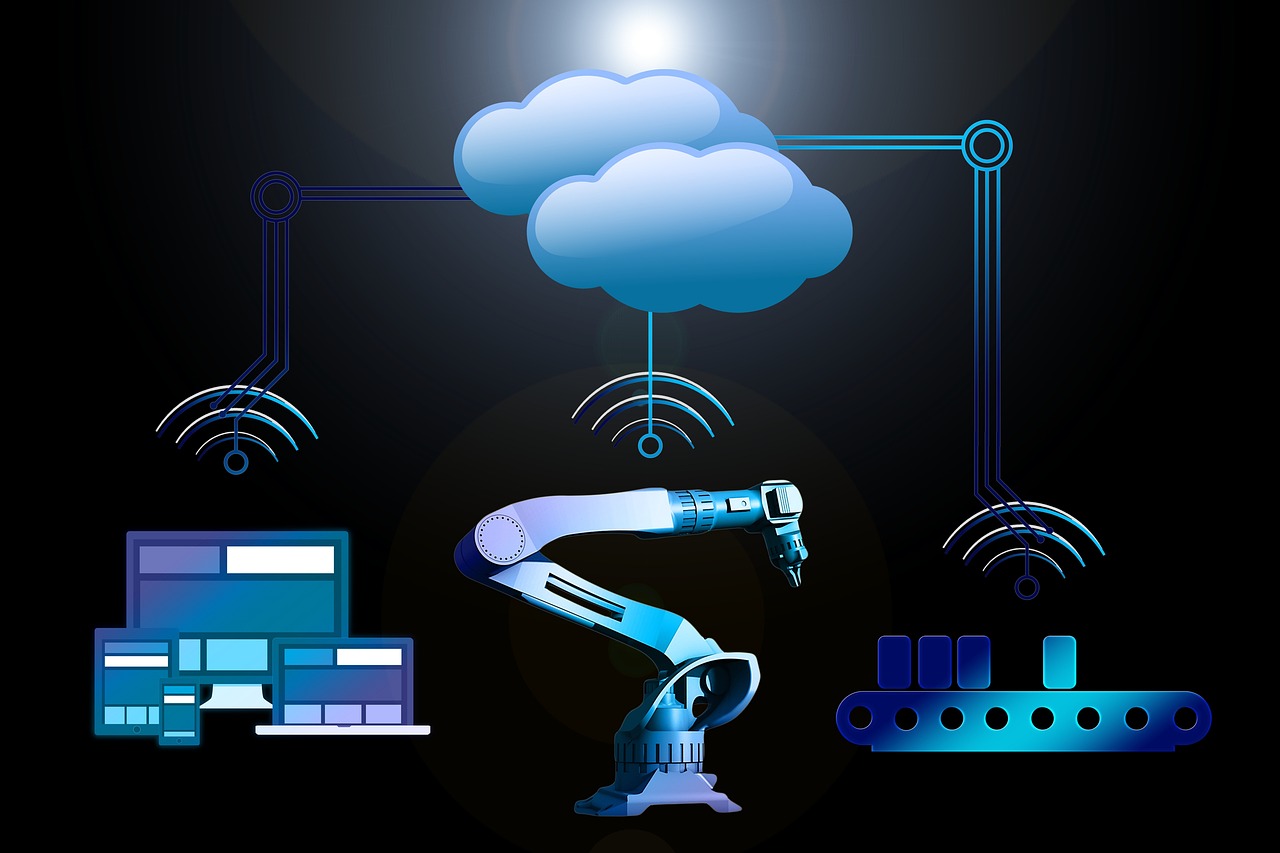
Train Robotic Manipulation Policies with LeRobot and Isaac Lab
Train Robotic Manipulation Policies utilizing LeRobot's advanced AI framework and Isaac Lab's simulation environment for comprehensive robotics training. This integration facilitates real-time learning and adaptability, enhancing automation capabilities in dynamic environments.
Glossary Tree
Explore the comprehensive technical hierarchy and ecosystem of robotic manipulation policies using LeRobot and Isaac Lab.
Protocol Layer
Robot Operating System (ROS)
A flexible framework for writing robot software, enabling communication between LeRobot and Isaac Lab components.
gRPC API Specification
A high-performance RPC framework facilitating communication between services in LeRobot and Isaac Lab integration.
TCP/IP Transport Protocol
The underlying transport mechanism ensuring reliable data transmission between robotic components and controllers.
Message Passing Interface (MPI)
A standardized and portable message-passing system for parallel computing in robotic manipulation tasks.
Data Engineering
NoSQL Database for Robotic Data
Utilizes NoSQL databases for flexible storage of diverse robotic manipulation data and logs.
Data Chunking for Efficient Processing
Splits large datasets into manageable chunks for faster processing and reduced latency in training models.
Access Control and Security Policies
Implements fine-grained access control to protect sensitive training data and ensure compliance with security standards.
Transactional Integrity in Data Updates
Ensures consistency and integrity in data updates during robotic policy training and evaluation phases.
AI Reasoning
Reinforcement Learning for Manipulation
Utilizes reinforcement learning algorithms to optimize robotic manipulation policies based on trial and error feedback.
Contextual Prompt Engineering
Designs prompts that provide contextual information to improve model responses and decision-making in manipulation tasks.
Generalization and Overfitting Control
Techniques to prevent overfitting while ensuring models generalize well across varied manipulation scenarios.
Sequential Reasoning Chains
Employs logical reasoning chains to deduce actions based on previous states and outcomes during manipulation.
Maturity Radar v2.0
Multi-dimensional analysis of deployment readiness.
Technical Pulse
Real-time ecosystem updates and optimizations.
LeRobot SDK for Isaac Integration
The LeRobot SDK now supports direct integration with Isaac, enabling seamless manipulation policy training through optimized APIs and enhanced data handling for robotic applications.
Enhanced Data Flow Protocols
New architectural enhancements streamline data flow between LeRobot and Isaac Lab, utilizing gRPC for efficient communication and real-time manipulation policy updates in robotic systems.
Advanced Authentication Mechanisms
Deployment of OAuth 2.0 and OpenID Connect for secure access control in LeRobot and Isaac Lab, ensuring robust protection of robotic manipulation policies and user data.
Pre-Requisites for Developers
Before deploying Train Robotic Manipulation Policies with LeRobot and Isaac Lab, confirm that your data architecture and security protocols are optimized to ensure operational reliability and scalability in production environments.
System Requirements
Core Components for Robotic Training
Normalized Data Schemas
Implement 3NF normalized schemas to ensure data integrity and reduce redundancy, crucial for accurate training outcomes.
Environment Variable Setup
Configure environment variables for LeRobot and Isaac Lab to manage paths and parameters effectively, ensuring smooth integrations.
Connection Pooling
Utilize connection pooling to manage database connections efficiently, significantly reducing latency during data retrieval for training.
Observability Framework
Set up an observability framework to monitor system metrics and logs, enabling quick identification of issues during training.
Common Pitfalls
Risks in Robotic Training Deployment
error Data Drift Issues
Data drift can lead to model performance degradation when training data diverges from real-world scenarios, affecting robot behavior.
bug_report Integration Failures
Misconfigurations during integration between LeRobot and Isaac Lab can cause unexpected behavior, disrupting the training workflow.
How to Implement
code Code Implementation
train_robot_policy.py
import os
import numpy as np
from typing import List, Dict
from isaac import Robot, Controller

# Configuration
class Config:
    MODEL_PATH: str = os.getenv('MODEL_PATH', './models/')
    NUM_EPISODES: int = int(os.getenv('NUM_EPISODES', 100))
    LEARNING_RATE: float = float(os.getenv('LEARNING_RATE', 0.001))

# Initialize the robot and controller
class RobotPolicy:
    def __init__(self, robot: Robot):
        self.robot = robot
        self.controller = Controller(robot)

    def train(self) -> None:
        for episode in range(Config.NUM_EPISODES):
            try:
                self.run_episode(episode)
            except Exception as e:
                print(f'Error during episode {episode}: {e}')

    def run_episode(self, episode: int) -> None:
        # Logic for running a single training episode
        observations = self.robot.get_observations()
        actions = self.policy(observations)
        rewards = self.controller.step(actions)
        self.update_model(rewards)

    def policy(self, observations: List[float]) -> List[float]:
        # Placeholder for policy logic
        return np.random.uniform(-1, 1, size=len(observations)).tolist()

    def update_model(self, rewards: float) -> None:
        # Logic to update the model with rewards
        pass

if __name__ == '__main__':
    robot = Robot()  # Initialize your robot
    robot_policy = RobotPolicy(robot)
    robot_policy.train()
Implementation Notes for Scale
This implementation leverages the Python framework with a focus on robotic control via the Isaac SDK. Key features include dynamic model loading, episode-based training for reinforcement learning, and error handling to ensure robustness. This design supports scalability by allowing the model to adapt through continuous learning and adjustment.
smart_toy AI Services

- SageMaker: Provides tools for training robotic policies efficiently.
- Lambda: Enables serverless execution of manipulation algorithms.
- ECS Fargate: Runs containerized applications for scalable policy training.

- Vertex AI: Facilitates training of complex AI models for robotics.
- Cloud Run: Runs containerized training workloads on-demand.
- Cloud Storage: Stores large datasets for robotic manipulation training.
Expert Consultation
Our team specializes in deploying AI-driven robotic solutions with LeRobot and Isaac Lab, ensuring optimal performance.
Technical FAQ
01. How does LeRobot integrate with Isaac Lab for robotic policy training?
LeRobot employs a modular architecture that interfaces seamlessly with Isaac Lab's simulation environment. Key steps include setting up the ROS 2 middleware, configuring the robot's sensors and actuators, and utilizing Isaac's APIs for real-time data exchange. This integration supports robust training scenarios for reinforcement learning and facilitates fine-tuning policies in realistic simulations.
02. What security measures are recommended for deploying LeRobot in production?
When deploying LeRobot, implement network segmentation to isolate robotic systems. Use TLS for secure communications between LeRobot and Isaac Lab. Additionally, enforce strict access controls using role-based access and ensure compliance with standards such as ISO/IEC 27001 for information security management to protect sensitive training data.
03. What happens if the robot encounters an unexpected obstacle during training?
In case of unexpected obstacles, the LeRobot system triggers a safety protocol. This includes immediate cessation of motion, logging the incident, and notifying the control system. Implementing robust error handling routines in the training code allows for dynamic adjustment of the robot's trajectory, ensuring safety and reliability during operation.
04. What are the prerequisites for running LeRobot with Isaac Lab?
To run LeRobot with Isaac Lab, ensure you have a compatible GPU for simulation, ROS 2 installed, and the necessary Python libraries such as TensorFlow or PyTorch for ML model integration. Additionally, a stable internet connection is required for accessing cloud resources and managing large datasets during training.
05. How does LeRobot's approach to training compare to traditional robotic systems?
LeRobot leverages advanced reinforcement learning techniques, providing a more adaptive training framework than traditional systems, which often rely on scripted behaviors. This allows for more complex task learning in dynamic environments. Additionally, LeRobot's simulation-driven approach reduces the need for extensive real-world trials, significantly lowering costs and time to deployment.
Ready to revolutionize robotic manipulation with LeRobot and Isaac Lab?
Our experts specialize in training robotic manipulation policies, helping you deploy intelligent systems that enhance operational efficiency and drive automation success.