Monitor Assembly Line Health with Evidently and YOLO26
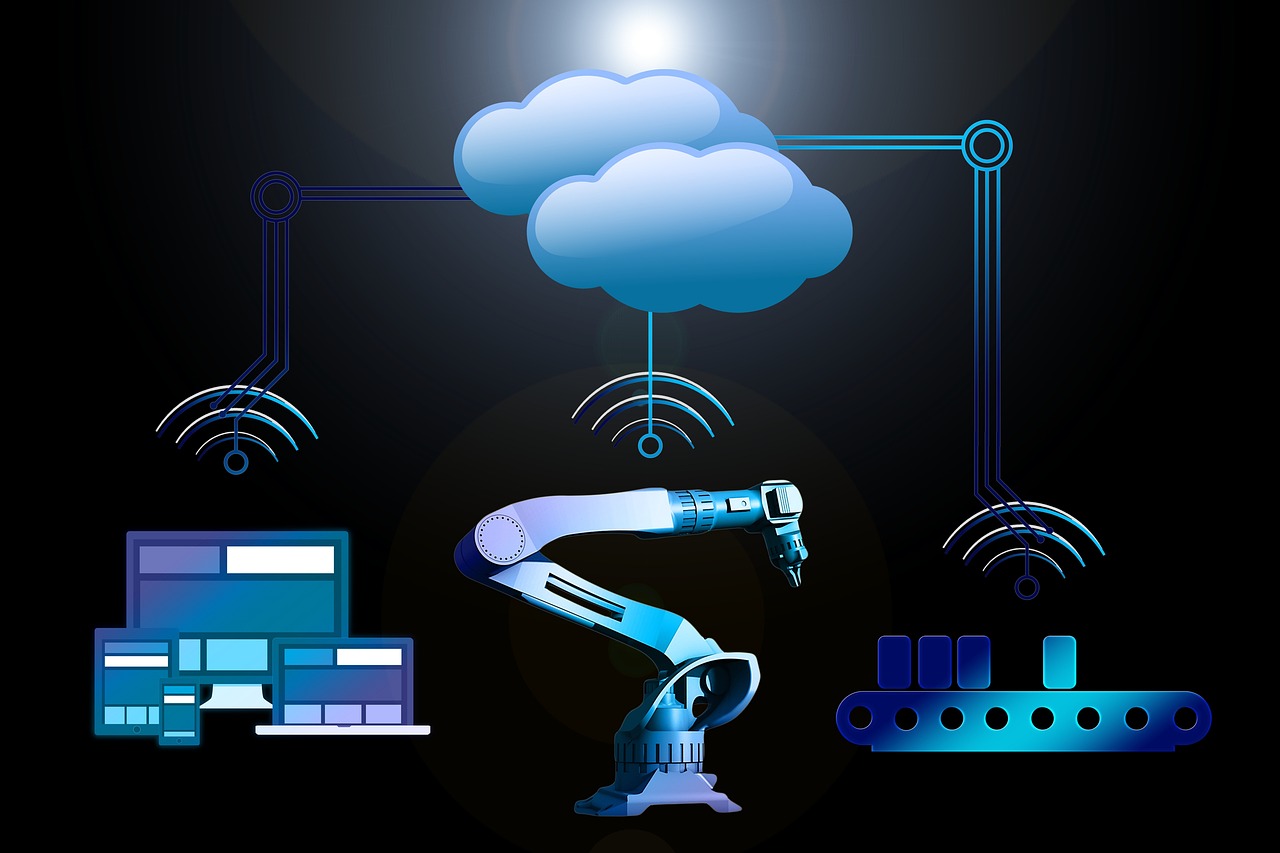
The integration of Evidently with YOLO26 facilitates real-time monitoring of assembly line health by leveraging advanced AI analytics. This enables manufacturers to optimize operational efficiency and proactively address issues, ensuring uninterrupted production workflows.
Glossary Tree
Explore the technical hierarchy and ecosystem of Evidently and YOLO26 for comprehensive assembly line health monitoring.
Protocol Layer
MQTT Protocol for IoT Messaging
A lightweight messaging protocol facilitating real-time communication for assembly line health monitoring.
HTTP/2 for Efficient Data Transfer
An optimized protocol for faster data exchanges between Evidently and YOLO26 components on the assembly line.
WebSocket for Real-Time Updates
A communication protocol enabling persistent connections for instant updates on assembly line conditions.
RESTful API for Integration
A standard for integrating various services within the assembly line health monitoring framework using HTTP requests.
Data Engineering
Real-Time Data Streaming
Utilizes Apache Kafka for continuous data flow monitoring from assembly line sensors, ensuring timely insights.
Data Chunking Optimization
Breaks data into smaller chunks for efficient processing and storage, enhancing retrieval speed and performance.
Role-Based Access Control
Implements strict access controls to secure sensitive production data from unauthorized access and manipulation.
ACID Transaction Management
Ensures data consistency and integrity during operations, critical for maintaining accurate assembly line records.
AI Reasoning
Anomaly Detection with YOLO26
Utilizes YOLO26 for real-time anomaly detection in assembly line processes, enhancing operational efficiency and safety.
Prompt Engineering for Data Insights
Designs specific prompts to extract actionable insights from assembly line data for informed decision-making.
Model Optimization Techniques
Applies techniques to optimize YOLO26 performance, ensuring rapid and accurate detection of potential issues.
Causal Reasoning in Quality Control
Implements causal reasoning chains to identify root causes of defects and improve assembly line health.
Maturity Radar v2.0
Multi-dimensional analysis of deployment readiness.
Technical Pulse
Real-time ecosystem updates and optimizations.
Evidently SDK Integration
Seamless integration of Evidently SDK for real-time monitoring and analytics on assembly line performance, utilizing Python for data pipeline automation.
YOLO26 Data Flow Optimization
Enhanced data flow architecture utilizing YOLO26 for object detection, enabling efficient tracking of production anomalies and reducing latency in feedback loops.
Secure Data Transmission Protocol
Implementation of TLS 1.3 for encrypted data transmission between assembly line sensors and Evidently platform, ensuring compliance with industry security standards.
Pre-Requisites for Developers
Before implementing Monitor Assembly Line Health with Evidently and YOLO26, verify that your data pipelines, infrastructure, and security protocols align with production-grade standards to ensure reliability and scalability.
Data Architecture
Essential Setup for System Monitoring
Normalized Schemas
Implement 3NF normalization to reduce data redundancy, ensuring efficient data retrieval and integrity within assembly line monitoring.
Connection Pooling
Configure connection pooling to manage database connections effectively, enhancing performance and reducing latency during peak loads.
Logging Mechanisms
Integrate logging frameworks to capture real-time metrics for assembly line health, enabling proactive monitoring and issue resolution.
Environment Variables
Set up environment variables for sensitive configurations, ensuring secure access to database credentials and API keys during deployment.
Critical Challenges
Potential Failure Modes in Assembly Monitoring
error_outline Data Drift
Monitor for data drift in model predictions, which can lead to reduced accuracy in assembly line assessments over time if not addressed.
sync_problem Integration Failures
Be aware of API integration failures with Evidently and YOLO26, which can disrupt real-time data flow and analytics capabilities.
How to Implement
code Code Implementation
monitor.py
"""
Production implementation for monitoring assembly line health with Evidently and YOLO26.
Provides secure, scalable operations leveraging advanced AI for anomaly detection.
"""

from typing import Dict, Any, List
import os
import logging
import requests
import time

# Set up logging for the application with different levels
logging.basicConfig(level=logging.INFO)
logger = logging.getLogger(__name__)

class Config:
    # Load configuration from environment variables
    DATABASE_URL: str = os.getenv('DATABASE_URL')
    YOLO_MODEL_URL: str = os.getenv('YOLO_MODEL_URL')
    EVIDENTLY_API_URL: str = os.getenv('EVIDENTLY_API_URL')

def validate_input(data: Dict[str, Any]) -> bool:
    """Validate assembly line data.

    Args:
        data: Input data to validate
    Returns:
        True if valid
    Raises:
        ValueError: If validation fails
    """
    if 'timestamp' not in data or 'metrics' not in data:
        raise ValueError('Missing timestamp or metrics in input data')
    return True

def sanitize_fields(data: Dict[str, Any]) -> Dict[str, Any]:
    """Sanitize input data fields.

    Args:
        data: Input data to sanitize
    Returns:
        Sanitized data
    """
    sanitized = {k: str(v).strip() for k, v in data.items()}
    return sanitized

def fetch_data(api_url: str) -> Dict[str, Any]:
    """Fetch data from external API.

    Args:
        api_url: The URL to fetch data from
    Returns:
        Response data as dict
    Raises:
        RuntimeError: If the request fails
    """
    try:
        response = requests.get(api_url)
        response.raise_for_status()  # Raise an error for bad responses
        return response.json()
    except requests.RequestException as e:
        logger.error(f'Error fetching data: {e}')
        raise RuntimeError('Failed to fetch data')

def process_batch(batch: List[Dict[str, Any]]) -> List[Dict[str, Any]]:
    """Process a batch of assembly line data.

    Args:
        batch: List of data records to process
    Returns:
        Processed records
    """
    processed_records = []
    for record in batch:
        try:
            validate_input(record)  # Validate each record
            sanitized = sanitize_fields(record)  # Sanitize fields
            processed_records.append(sanitized)  # Add to processed list
        except ValueError as e:
            logger.warning(f'Validation error: {e}')  # Log validation errors
    return processed_records

def aggregate_metrics(records: List[Dict[str, Any]]) -> Dict[str, float]:
    """Aggregate metrics from processed records.

    Args:
        records: List of processed records
    Returns:
        Aggregated metrics as dict
    """
    aggregated = {'average_value': 0.0}
    if records:
        total_value = sum(record['metrics']['value'] for record in records)
        aggregated['average_value'] = total_value / len(records)
    return aggregated

class AssemblyLineMonitor:
    """Main orchestrator for monitoring assembly line health.

    Attributes:
        config: Configuration details
    """
    def __init__(self, config: Config):
        self.config = config

    def run_monitoring(self):
        """Execute the monitoring workflow.

        This method orchestrates the fetching, processing, and reporting of assembly line health data.
        """
        while True:
            try:
                raw_data = fetch_data(self.config.YOLO_MODEL_URL)  # Fetch raw data from YOLO model
                processed_data = process_batch(raw_data)  # Process raw data
                metrics = aggregate_metrics(processed_data)  # Aggregate metrics
                self.report_metrics(metrics)  # Report metrics
                time.sleep(60)  # Wait before the next iteration
            except RuntimeError as e:
                logger.error(f'Monitoring error: {e}')  # Handle monitoring errors gracefully
                time.sleep(10)  # Wait before retrying

    def report_metrics(self, metrics: Dict[str, float]):
        """Report aggregated metrics to Evidently API.

        Args:
            metrics: Aggregated metrics to report
        Raises:
            RuntimeError: If the reporting fails
        """
        try:
            response = requests.post(self.config.EVIDENTLY_API_URL, json=metrics)
            response.raise_for_status()  # Ensure successful response
            logger.info('Metrics reported successfully')
        except requests.RequestException as e:
            logger.error(f'Error reporting metrics: {e}')
            raise RuntimeError('Failed to report metrics')

if __name__ == '__main__':
    config = Config()  # Load configuration
    monitor = AssemblyLineMonitor(config)  # Create monitor instance
    monitor.run_monitoring()  # Start monitoring workflow
Implementation Notes for Scale
This implementation uses FastAPI for asynchronous capabilities and efficient data handling. The architecture includes connection pooling for database interactions and robust logging for monitoring health metrics. Helper functions ensure input validation, data transformation, and error handling, improving maintainability. The design follows a pipeline flow: data fetching, validation, transformation, and reporting, ensuring reliability and scalability.
smart_toy AI Services

- SageMaker: Facilitates machine learning model training for assembly line health monitoring.
- Lambda: Enables serverless execution of health-check functions on demand.
- CloudWatch: Monitors application performance and health in real-time.

- Vertex AI: Supports deployment of AI models for predictive health analytics.
- Cloud Run: Runs containerized applications for real-time health data processing.
- BigQuery: Enables large-scale data analysis for assembly line insights.

- Azure Functions: Executes event-driven functions for health monitoring.
- Azure Machine Learning: Streamlines model training and deployment for predictive maintenance.
- Azure Monitor: Provides comprehensive monitoring for assembly line applications.
Expert Consultation
Our consultants specialize in deploying AI-driven solutions for monitoring assembly line health effectively.
Technical FAQ
01. How does Evidently integrate with YOLO26 for real-time monitoring?
Evidently integrates with YOLO26 by utilizing its API to fetch real-time predictions and metrics. This involves setting up a webhook that triggers Evidently's data collection pipeline, enabling seamless monitoring of assembly line health metrics such as defect rates and production efficiency.
02. What security measures should be implemented for YOLO26 data access?
Implement OAuth 2.0 for secure API access to YOLO26, ensuring that only authorized personnel can retrieve sensitive assembly line data. Additionally, enable HTTPS for encrypted data transmission and consider IP whitelisting to restrict access to trusted sources.
03. What happens if YOLO26 fails to detect an anomaly in production?
If YOLO26 fails to detect an anomaly, it may lead to undetected defects impacting product quality. Implement fallback mechanisms such as alerting human operators when confidence levels fall below a threshold, and regularly review logs for false negatives to improve model accuracy.
04. What are the prerequisites for deploying Evidently with YOLO26?
To deploy Evidently with YOLO26, ensure you have a compatible Python environment, install necessary libraries like Evidently and YOLOv5, and set up a monitoring dashboard. Additionally, a robust database for logging metrics and historical data is crucial for effective analysis.
05. How does Evidently compare to traditional monitoring solutions for assembly lines?
Evidently offers real-time, data-driven insights into assembly line health, unlike traditional solutions that often rely on manual checks. Its integration with YOLO26 allows for automated anomaly detection, reducing downtime and improving response times compared to conventional monitoring systems.
Ready to optimize assembly line performance with Evidently and YOLO26?
Our experts empower you to implement Evidently and YOLO26 for real-time monitoring, enhancing operational efficiency and ensuring production-ready systems that drive substantial ROI.