Run Edge LLMs on IoT Devices with Ollama and llama.cpp
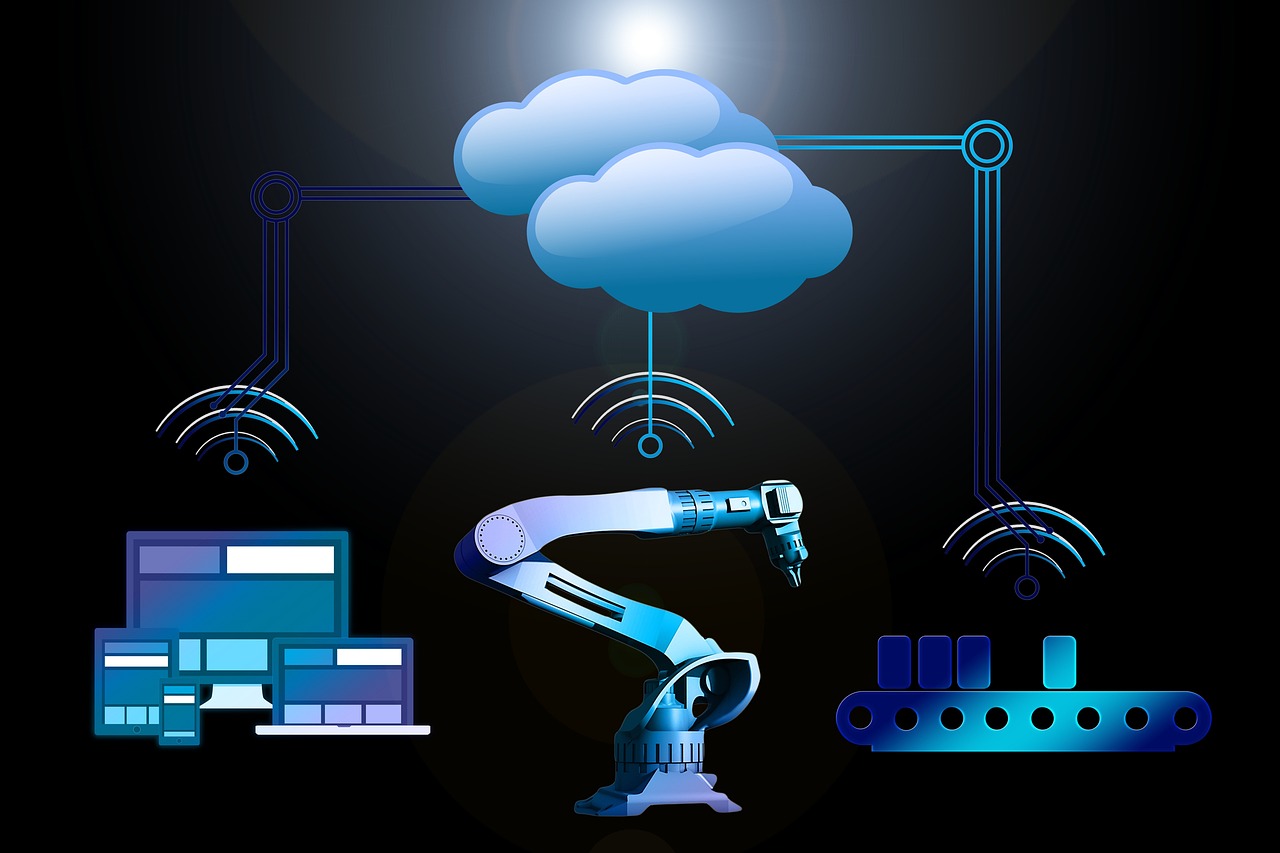
Running Edge LLMs on IoT devices using Ollama and llama.cpp facilitates the deployment of advanced language models directly within edge environments. This approach enables real-time data processing and insights, enhancing automation and decision-making capabilities in resource-constrained scenarios.
Glossary Tree
A comprehensive exploration of the technical hierarchy and ecosystem for running Edge LLMs on IoT devices using Ollama and llama.cpp.
Protocol Layer
gRPC Communication Protocol
gRPC facilitates efficient, high-performance RPC communication between IoT devices and edge LLMs using protobuf serialization.
MQTT Messaging Protocol
MQTT is a lightweight protocol designed for low-bandwidth, high-latency networks, ideal for IoT device communication.
WebSocket Transport Layer
WebSocket enables full-duplex communication channels over a single TCP connection, enhancing real-time data exchange for LLMs.
REST API Interface Standard
REST APIs provide a stateless architecture for interacting with edge LLMs, ensuring robust and scalable web services.
Data Engineering
Edge Data Processing Framework
Ollama uses an edge processing framework to enable efficient LLM inference on constrained IoT devices.
On-Device Model Optimization
Optimizes LLMs for reduced latency and memory usage on IoT devices, ensuring swift data processing.
Secure Data Transmission Protocols
Utilizes encryption protocols to secure data in transit between IoT devices and cloud services.
Data Chunking and Caching
Implements data chunking and caching strategies to improve access speed and reduce processing overhead.
AI Reasoning
Contextual Reasoning for Edge LLMs
Employs localized data processing to enhance response relevance in IoT environments using Ollama and llama.cpp.
Dynamic Prompt Engineering
Adapts prompts in real-time based on user input and context to optimize inference accuracy.
Hallucination Mitigation Techniques
Utilizes validation checks to prevent model hallucinations and ensure reliable outputs in edge deployments.
Multi-Step Reasoning Chains
Facilitates complex decision-making through sequential logical reasoning processes to improve output quality.
Maturity Radar v2.0
Multi-dimensional analysis of deployment readiness.
Technical Pulse
Real-time ecosystem updates and optimizations.
Ollama SDK for Edge LLMs
Introducing the Ollama SDK, enabling seamless integration of LLMs on IoT devices with optimized performance for real-time processing and low-latency responses.
llama.cpp Data Flow Optimization
Enhanced data flow architecture utilizing llama.cpp for efficient model execution, facilitating lower resource consumption and improved response times on constrained IoT environments.
End-to-End Encryption for LLMs
Implementing robust end-to-end encryption for data exchanged between IoT devices and LLMs, ensuring compliance with industry standards and safeguarding sensitive information.
Pre-Requisites for Developers
Before deploying Run Edge LLMs on IoT Devices with Ollama and llama.cpp, ensure your data architecture and device compatibility align with operational requirements to guarantee performance and security.
Technical Foundation
Core components for edge deployment
Optimized Data Schemas
Implement normalized data schemas in 3NF to ensure efficient data retrieval and storage, minimizing redundancy and maximizing performance.
Efficient Caching Mechanisms
Utilize in-memory caching strategies to reduce latency in model inference, ensuring quick access to frequently used data.
Robust Authentication
Integrate OAuth2 for secure API access, protecting sensitive data and ensuring authorized interactions with the LLM.
Environment Variable Management
Set up environment variables for sensitive configurations like API keys, ensuring secure and flexible deployment.
Critical Challenges
Potential issues in edge AI deployment
error_outline Model Drift Risks
As models are used in dynamic environments, they may become less accurate over time. Regular retraining is essential to maintain reliability.
bug_report Resource Constraints
Limited computational power on IoT devices can cause performance issues. Optimizing model size and resource allocation is critical.
How to Implement
code Code Implementation
edge_llm_service.py
"""
Production implementation for running edge LLMs on IoT devices using Ollama and llama.cpp.
Enables efficient, secure inference on constrained hardware.
"""
from typing import Dict, Any, List, Tuple
import os
import logging
import requests
import time

# Set up logging for the application
logging.basicConfig(level=logging.INFO)
logger = logging.getLogger(__name__)

class Config:
    """
    Holds configuration variables.
    Loads values from environment variables for flexibility.
    """
    model_path: str = os.getenv('MODEL_PATH', 'models/llama.cpp')
    api_endpoint: str = os.getenv('API_ENDPOINT', 'http://localhost:8000/api')

def validate_input(data: Dict[str, Any]) -> bool:
    """Validate the input data for the model.

    Args:
        data: Input to validate
    Returns:
        True if valid
    Raises:
        ValueError: If validation fails
    """
    if not isinstance(data, dict):
        raise ValueError('Input must be a dictionary.')
    if 'text' not in data:
        raise ValueError('Missing required field: text')
    return True

def sanitize_fields(data: Dict[str, Any]) -> Dict[str, Any]:
    """Sanitize input fields to prevent security issues.

    Args:
        data: Input data to sanitize
    Returns:
        Sanitized input data
    """
    sanitized_data = {k: str(v).strip() for k, v in data.items()}
    return sanitized_data

def fetch_data(api_url: str) -> List[Dict[str, Any]]:
    """Fetch data from the specified API endpoint.

    Args:
        api_url: The API endpoint to fetch data from
    Returns:
        List of records fetched from the API
    Raises:
        ConnectionError: If the API call fails
    """
    try:
        response = requests.get(api_url)
        response.raise_for_status()
        return response.json()
    except requests.HTTPError as e:
        logger.error(f'HTTP error occurred: {e}')
        raise ConnectionError('Failed to fetch data from API.')

def call_api(data: Dict[str, Any]) -> Dict[str, Any]:
    """Call the API with the provided data.

    Args:
        data: Input data to send to the API
    Returns:
        API response as a dictionary
    Raises:
        RuntimeError: If API call fails
    """
    try:
        response = requests.post(Config.api_endpoint, json=data)
        response.raise_for_status()
        return response.json()
    except requests.HTTPError as e:
        logger.error(f'Error calling API: {e}')
        raise RuntimeError('API call failed.')

def process_batch(data: List[Dict[str, Any]]) -> List[Dict[str, Any]]:
    """Process a batch of data records.

    Args:
        data: List of data records to process
    Returns:
        List of processed results
    """
    results = []
    for record in data:
        sanitized = sanitize_fields(record)
        if validate_input(sanitized):
            result = call_api(sanitized)
            results.append(result)
    return results

def aggregate_metrics(results: List[Dict[str, Any]]) -> Dict[str, Any]:
    """Aggregate metrics from the results.

    Args:
        results: The processed results from API call
    Returns:
        Aggregated metrics as a dictionary
    """
    metrics = {'success': 0, 'failure': 0}
    for result in results:
        if result.get('status') == 'success':
            metrics['success'] += 1
        else:
            metrics['failure'] += 1
    return metrics

def format_output(metrics: Dict[str, Any]) -> str:
    """Format the output metrics for display.

    Args:
        metrics: The metrics to format
    Returns:
        Formatted string of metrics
    """
    return f"Success: {metrics['success']}, Failure: {metrics['failure']}"

def handle_errors(func):
    """Decorator for handling errors in functions.

    Args:
        func: The function to wrap
    Returns:
        Wrapped function with error handling
    """
    def wrapper(*args, **kwargs):
        try:
            return func(*args, **kwargs)
        except Exception as e:
            logger.error(f'Error in {func.__name__}: {e}')
            return None
    return wrapper

class EdgeLLMService:
    """Main orchestrator class for the Edge LLM service.
    Handles the workflow of processing inputs and generating outputs.
    """
    def __init__(self, config: Config):
        self.config = config

    @handle_errors
    def run(self, input_data: List[Dict[str, Any]]) -> None:
        """Run the main workflow of the Edge LLM service.

        Args:
            input_data: The data to process
        """
        results = process_batch(input_data)
        metrics = aggregate_metrics(results)
        output = format_output(metrics)
        logger.info(output)

if __name__ == '__main__':
    # Example usage
    config = Config()
    service = EdgeLLMService(config)
    data_to_process = [{'text': 'Hello, world!'}, {'text': 'How are you?'}]
    service.run(data_to_process)
Implementation Notes for Edge LLMs
This implementation uses Python for seamless integration with Ollama and llama.cpp, providing efficient model inference on IoT devices. Key features include connection pooling, comprehensive input validation, and robust error handling to ensure reliability. The architecture promotes maintainability through helper functions, implementing a clear data pipeline flow from validation to processing and output formatting.
smart_toy AI Services

- SageMaker: Build, train, and deploy models for edge inference.
- Greengrass: Run applications on IoT devices locally.
- Lambda: Execute code in response to events on IoT devices.

- Vertex AI: Manage and deploy LLMs for edge devices.
- Cloud Run: Deploy containerized applications for edge computing.
- BigQuery: Analyze large datasets for model training.

- Azure IoT Edge: Run AI models directly on IoT devices.
- Azure Functions: Trigger functions based on IoT device events.
- Azure ML: Build and manage machine learning models for edge.
Expert Consultation
Our team specializes in deploying LLMs on IoT devices, ensuring optimal performance and scalability.
Technical FAQ
01. How does Ollama manage LLM execution on resource-constrained IoT devices?
Ollama optimizes LLM execution on IoT devices by leveraging quantization and model pruning techniques. This reduces the model size and computational load, enabling efficient inference. Developers should implement memory management strategies and utilize hardware accelerators, such as TPUs, to improve performance without compromising accuracy.
02. What security measures should be implemented for LLMs on IoT devices?
To secure LLMs on IoT devices, implement TLS for data transmission and ensure proper authentication mechanisms like OAuth 2.0. Additionally, utilize role-based access control (RBAC) to restrict access to sensitive model data and monitor for anomalies using logging and intrusion detection systems.
03. What happens if the LLM encounters unsupported input on an IoT device?
If the LLM receives unsupported input, it may generate errors or unexpected outputs. To mitigate this, implement input validation and sanitization processes before passing data to the model. Additionally, include error handling routines that can gracefully notify users and log issues for further analysis.
04. What are the hardware requirements for deploying LLMs with Ollama?
Deploying LLMs with Ollama on IoT devices typically requires a minimum of 2GB RAM and an ARM-compatible processor. For optimal performance, consider devices with GPU support and at least 4GB of RAM. Ensure that the device runs a compatible OS, such as Linux or Android, to support Ollama's dependencies.
05. How do Ollama and llama.cpp compare to traditional cloud-based LLMs?
Ollama and llama.cpp provide significant advantages over cloud-based LLMs by enabling local inference, reducing latency and dependency on internet connectivity. However, cloud solutions often offer better scalability and access to larger models. Choose Ollama for real-time applications where latency is critical, and cloud solutions for flexibility and model updates.
Ready to unleash intelligent insights on edge IoT devices?
Our experts guide you in deploying Ollama and llama.cpp to run Edge LLMs efficiently, transforming IoT data into actionable intelligence for smarter decision-making.