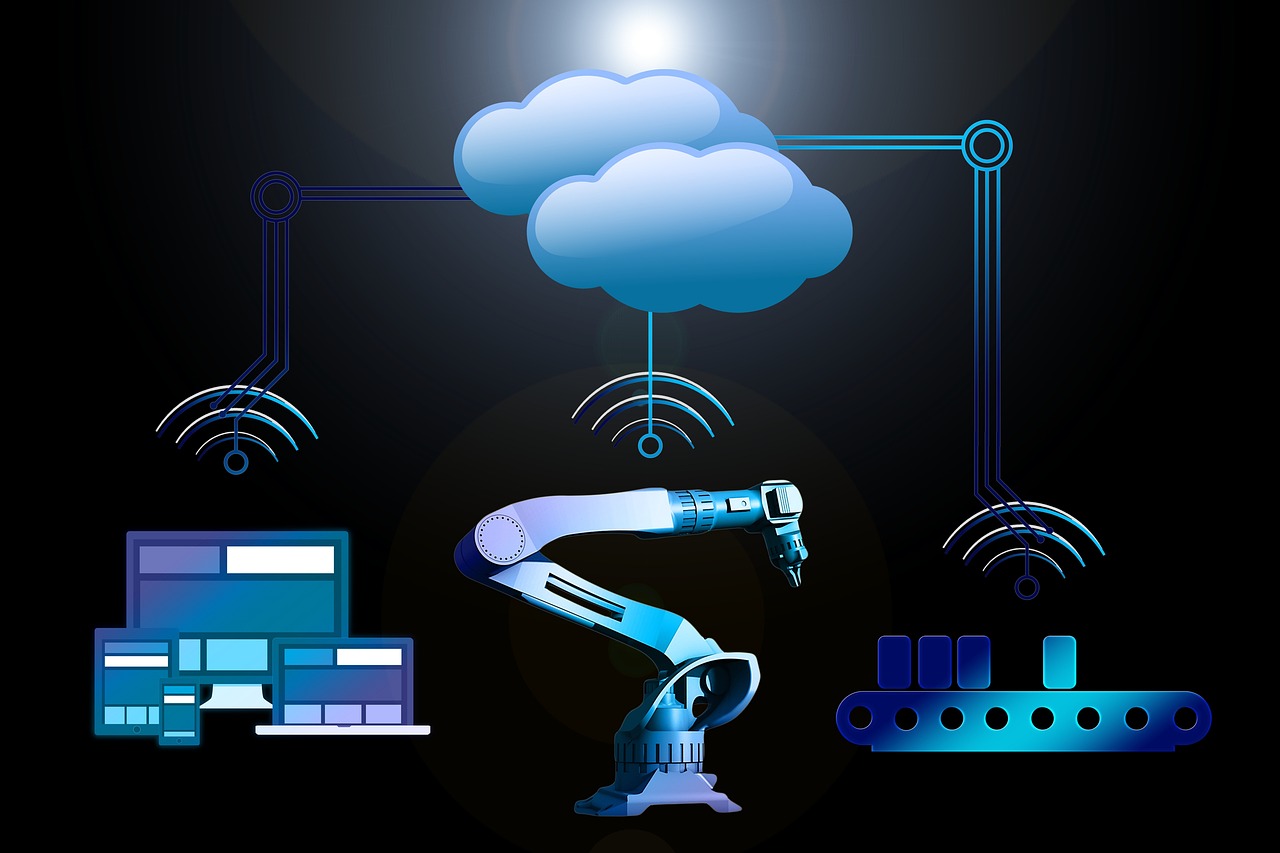
Deploy Quantized LLMs to Industrial Sensors with CTranslate2 and Triton
Deploying quantized LLMs to industrial sensors using CTranslate2 and Triton facilitates seamless integration of advanced AI capabilities into existing sensor architectures. This approach enhances real-time data processing and decision-making, driving automation and operational efficiency in industrial applications.
Glossary Tree
Explore the comprehensive technical hierarchy and ecosystem for deploying quantized LLMs to industrial sensors using CTranslate2 and Triton.
Protocol Layer
gRPC (Google Remote Procedure Call)
A high-performance RPC framework enabling efficient service communication in deploying quantized LLMs.
ONNX (Open Neural Network Exchange)
An open format for AI models facilitating interoperability across different frameworks and platforms.
HTTP/2 (Hypertext Transfer Protocol)
A major revision of HTTP, enhancing performance through multiplexing and header compression for data transport.
RESTful API (Representational State Transfer)
An architectural style for designing networked applications using stateless, client-server communication.
Data Engineering
CTranslate2 for Model Inference
CTranslate2 efficiently manages model inference with quantized LLMs, optimizing resource utilization in industrial sensor environments.
Optimized Data Chunking
Data chunking allows efficient processing and transmission of sensor data, enhancing throughput and reducing latency.
Secure Data Transmission
Utilizes encryption protocols to ensure secure communication of sensitive data between sensors and processing systems.
Consistency in Real-Time Analytics
Employs strong consistency models to maintain data integrity during concurrent access in industrial applications.
AI Reasoning
Quantized Model Inference
Utilizes compressed neural networks for efficient real-time reasoning on industrial sensors with minimal latency.
Adaptive Prompt Engineering
Dynamic adjustment of input prompts to enhance model responsiveness and context relevance in sensor applications.
Hallucination Mitigation Techniques
Methods to reduce inaccurate outputs by validating model predictions against contextual data and sensor feedback.
Multi-Stage Reasoning Chain
Structured sequences of reasoning steps to enhance decision-making and output accuracy in operational environments.
Maturity Radar v2.0
Multi-dimensional analysis of deployment readiness.
Technical Pulse
Real-time ecosystem updates and optimizations.
CTranslate2 SDK for LLM Deployment
Enhanced CTranslate2 SDK integration supports quantized LLMs, optimizing deployment on industrial sensors with low latency and high throughput through streamlined APIs.
Triton Inference Server Optimization
Latest Triton release optimizes data flow for quantized LLMs, enabling dynamic batching and serverless architecture for seamless industrial sensor integration.
Enhanced Data Encryption Protocol
New data encryption features ensure secure communication between sensors and LLMs, utilizing AES-256 encryption for compliance with industrial security standards.
Pre-Requisites for Developers
Before deploying Quantized LLMs with CTranslate2 and Triton, confirm that your data architecture, resource allocation, and security protocols meet rigorous standards to ensure scalability and operational reliability.
Technical Foundation
Essential setup for industrial deployment
Normalized Data Schemas
Implement normalized data schemas to ensure efficient data retrieval and reduce redundancy, which is crucial for optimized model performance.
Environment Variables
Define environment variables for critical configurations such as API keys and model parameters to ensure secure and flexible deployments.
Connection Pooling
Utilize connection pooling to maintain efficient database connections, enhancing response time and reducing latency in sensor data processing.
Comprehensive Logging
Set up comprehensive logging to monitor model performance and data flow, facilitating quick troubleshooting and system health checks.
Critical Challenges
Common errors in AI-driven deployments
error Data Drift Issues
Data drift can cause model performance degradation due to changes in input data distributions, leading to inaccurate predictions in real time.
sync_problem Integration Failures
API integration failures can disrupt data flow between sensors and models, leading to potential downtime and loss of valuable insights.
How to Implement
code Code Implementation
deploy_llm.py
"""
Production implementation for deploying quantized LLMs to industrial sensors using CTranslate2 and Triton.
Provides secure, scalable operations.
"""

from typing import Dict, Any, List
import os
import logging
import time
import requests

# Logger setup for tracking application flow and errors
logging.basicConfig(level=logging.INFO)
logger = logging.getLogger(__name__)

class Config:
    """
    Configuration class to load environment variables.
    """
    ctranslate_model_path: str = os.getenv('CTRANSLATE_MODEL_PATH', '/models/')
    triton_server_url: str = os.getenv('TRITON_SERVER_URL', 'http://localhost:8000')
    db_url: str = os.getenv('DATABASE_URL')

def validate_input(data: Dict[str, Any]) -> bool:
    """Validate input data for model inference.

    Args:
        data: Input data to validate
    Returns:
        True if valid
    Raises:
        ValueError: If validation fails
    """
    if 'sensor_id' not in data:
        raise ValueError('Missing sensor_id')  # Validate presence of sensor_id
    if 'input_data' not in data:
        raise ValueError('Missing input_data')  # Validate presence of input_data
    return True

def sanitize_fields(data: Dict[str, Any]) -> Dict[str, Any]:
    """Sanitize input fields to prevent injection attacks.

    Args:
        data: Input data to sanitize
    Returns:
        Sanitized input data
    """
    sanitized_data = {key: str(value).strip() for key, value in data.items()}
    return sanitized_data

def fetch_data(sensor_id: str) -> Dict[str, Any]:
    """Fetch data from a sensor.

    Args:
        sensor_id: ID of the sensor to fetch data from
    Returns:
        Data fetched from the sensor
    Raises:
        Exception: If data fetching fails
    """
    try:
        response = requests.get(f'{Config.triton_server_url}/sensors/{sensor_id}/data')
        response.raise_for_status()  # Raise error for bad responses
        return response.json()
    except requests.RequestException as e:
        logger.error(f'Error fetching data for sensor {sensor_id}: {e}')
        raise Exception('Failed to fetch data')

def normalize_data(data: List[float]) -> List[float]:
    """Normalize data for model input.

    Args:
        data: Raw input data
    Returns:
        Normalized data
    """
    max_val = max(data)
    normalized = [x / max_val for x in data]  # Simple normalization
    return normalized

def transform_records(data: Dict[str, Any]) -> Dict[str, Any]:
    """Transform records into required format for CTranslate2.

    Args:
        data: Input data to transform
    Returns:
        Transformed data suitable for model inference
    """
    return {'input_ids': [int(x) for x in data['input_data']]}  # Example transformation

def process_batch(batch: List[Dict[str, Any]]) -> List[Dict[str, Any]]:
    """Process a batch of input data for inference.

    Args:
        batch: List of input data dictionaries
    Returns:
        List of inference results
    """
    results = []
    for record in batch:
        try:
            validate_input(record)  # Validate each record
            sanitized = sanitize_fields(record)  # Sanitize for security
            normalized = normalize_data(sanitized['input_data'])  # Normalize the data
            transformed = transform_records({'input_data': normalized})  # Transform the data
            results.append(transformed)  # Store the result
        except Exception as e:
            logger.warning(f'Processing failed for record {record}: {e}')  # Log warnings for processing errors
    return results

def save_to_db(results: List[Dict[str, Any]]) -> None:
    """Save inference results to the database.

    Args:
        results: Inference results to save
    Raises:
        Exception: If saving to DB fails
    """
    # Placeholder for database saving logic
    pass

class InferenceOrchestrator:
    """Orchestrates the inference process for deploying quantized LLMs.
    """
    def __init__(self):
        self.config = Config()  # Load configuration

    def run_inference(self, sensor_id: str) -> None:
        """Run inference for a given sensor_id.

        Args:
            sensor_id: ID of the sensor
        """
        try:
            raw_data = fetch_data(sensor_id)  # Fetch data from the sensor
            results = process_batch([raw_data])  # Process the fetched data
            save_to_db(results)  # Save results to DB
        except Exception as e:
            logger.error(f'Inference failed for sensor {sensor_id}: {e}')  # Log errors

if __name__ == '__main__':
    orchestrator = InferenceOrchestrator()  # Create orchestrator instance
    # Example usage
    sensor_id = 'sensor_1'
    orchestrator.run_inference(sensor_id)  # Run inference for example sensor
Implementation Notes for Scale
This implementation uses Python with a focus on CTranslate2 and Triton for deploying quantized LLMs. Key production features include connection pooling, input validation, and robust logging. The architecture follows a modular design, improving maintainability through helper functions. The data pipeline flows from validation to transformation and processing, ensuring reliable and secure operations.
smart_toy AI Services

- SageMaker: Easily deploy LLMs for real-time sensor data analysis.
- Lambda: Run inference functions triggered by sensor data.
- ECS Fargate: Managed container service for scalable deployments.

- Vertex AI: Streamlines LLM integration with industrial applications.
- Cloud Run: Easily deploy containerized models for inference.
- Cloud Functions: Serverless functions for dynamic sensor event handling.

- Azure Machine Learning: Comprehensive platform for LLM training and inference.
- Azure Functions: Execute code in response to sensor data events.
- AKS: Managed Kubernetes for orchestrating complex deployments.
Expert Consultation
Our team specializes in deploying quantized LLMs to enhance industrial sensor performance and efficiency.
Technical FAQ
01. How does CTranslate2 optimize quantized LLMs for industrial sensors?
CTranslate2 employs optimized tensor operations to leverage quantized weights, which significantly reduces memory footprint and computation latency. This is achieved through efficient model loading and execution using low-precision arithmetic, enhancing real-time responsiveness in industrial sensor applications without sacrificing accuracy.
02. What security measures are essential when deploying LLMs with Triton?
When deploying LLMs with Triton, consider implementing TLS for secure communication, API key-based authentication for access control, and role-based access policies. Additionally, enable logging and monitoring to track access patterns and potential security breaches, ensuring compliance with industry standards.
03. What happens if the LLM generates invalid outputs for sensor data?
If an LLM generates invalid outputs, implement a validation layer to filter outputs before they reach the sensors. This can involve threshold checks or fallback mechanisms that revert to predefined responses, thus maintaining system integrity and preventing potential operational failures.
04. What are the prerequisites for using CTranslate2 with Triton in production?
To use CTranslate2 with Triton, ensure you have a compatible GPU-enabled environment, the Triton Inference Server installed, and necessary dependencies like CUDA and cuDNN configured. Additionally, quantized model files must be prepared and verified for compatibility with the inference server.
05. How does deploying quantized LLMs via Triton compare to other frameworks?
Deploying quantized LLMs via Triton offers advantages such as dynamic batching and model versioning, which are not always present in alternatives like TensorFlow Serving or ONNX Runtime. Triton's multi-model serving capabilities and optimized resource utilization make it a strong choice for industrial applications.
Ready to revolutionize your industrial sensors with Quantized LLMs?
Our consultants specialize in deploying Quantized LLMs with CTranslate2 and Triton, ensuring optimized performance and intelligent integration for your industrial applications.